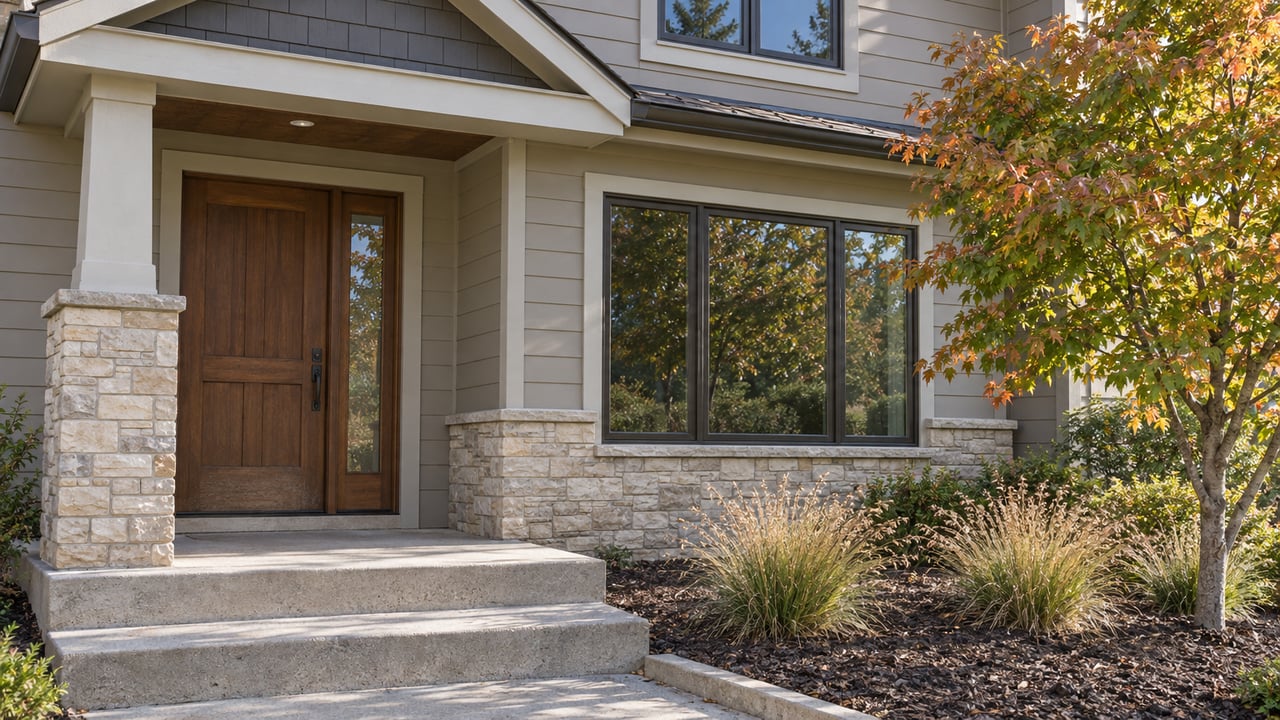
The housing market is giving buyers something they have had relatively little of during much of the past several years: negotiating room.
Across the country, sellers are increasingly agreeing to concessions that help buyers reduce the upfront or ongoing cost of purchasing a home. In August 2026, 44.7% of U.S. home sales included a seller concession, compared with 42.6% in August 2025. That was the highest August share recorded since at least 2020.
That shift matters well beyond the national headline.
For Colorado buyers, more negotiating flexibility can create opportunities to reduce closing costs, address inspection concerns, or structure a purchase more strategically. For sellers, the increase in concessions reinforces the importance of accurate pricing, strong presentation, and understanding what buyers value most. For both sides, it is another reminder that the final sale price tells only part of the story.
The market is not simply moving from "good for sellers" to "good for buyers." Conditions vary by price point, property type, neighborhood, inventory level, and individual transaction. Luxury real estate can behave very differently from entry-level housing. A well-positioned home can attract significant interest even while another property nearby requires incentives to close.
For buyers and sellers in the Denver metro area and throughout Colorado, understanding those distinctions is becoming increasingly important.
Seller Concessions Are Becoming a Bigger Part of the Negotiation
A seller concession is generally something the seller provides that reduces a buyer's cost of completing the purchase. Depending on the transaction and financing structure, that might involve assistance with closing costs or funds related to repairs and other agreed-upon expenses.
It is important to distinguish a concession from a straightforward price reduction.
In August 2026, 44.7% of U.S. home sales included concessions, while 15.8% of homes sold during the month involved both a price drop and a concession. The latter figure was slightly higher than the 15.6% recorded in August 2025.
Those numbers illustrate why buyers and sellers should look beyond asking and closing prices when evaluating the market.
Imagine two homes that ultimately sell for similar prices. One may close near its asking price after the seller contributes toward the buyer's closing expenses. Another may undergo a price reduction before receiving an offer. A third might close without a formal price adjustment but include negotiated repairs.
The headline sales price does not necessarily reveal the entire economic picture.
That is particularly relevant when evaluating comparable properties. Sellers need to understand not only what neighboring homes sold for, but also how those transactions were structured whenever that information is available and relevant. Buyers similarly benefit from knowing where negotiation may be possible beyond the offer price itself.
In a market with more choices, deal structure becomes an increasingly important part of real estate strategy.
More Inventory Gives Buyers More Choices
One of the forces behind increasing concessions is a broader imbalance between the number of homes for sale and the number of active buyers.
In July 2026, there were approximately 1.46 million sellers compared with 967,000 buyers nationally. That meant sellers outnumbered buyers by 51%, creating significantly more competition among available homes.
A market with at least 10% more sellers than buyers can generally provide buyers with considerably more choice. Nearly 80% of cities met that threshold based on the latest figures.
Those numbers help explain why concessions have become more prevalent.
When buyers have multiple viable properties to choose from, they do not necessarily have to overlook condition issues, awkward layouts, deferred maintenance, or ambitious pricing. They can compare homes more carefully and, in some cases, negotiate accordingly.
That does not mean every buyer automatically has leverage.
Real estate remains intensely local. Even within one Colorado community, inventory can differ substantially based on price range, home style, school boundary, lot size, condition, views, updates, and location. A beautifully presented home in a sought-after neighborhood may still generate strong competition while a similar property with deferred maintenance sits longer.
That is why broad national statistics should provide context rather than dictate a Colorado real estate strategy.
At Corken + Company, we look at the conditions surrounding the individual property and transaction. The most useful question is not simply whether the national market favors buyers or sellers. It is how much competition exists for this particular home, at this particular price, in this particular Colorado submarket.
What Buyers Can Learn From a More Negotiable Market
For buyers who spent the highly competitive years of the housing market watching homes sell quickly and with limited negotiation, current conditions can require a different mindset.
A greater number of available properties can create more time for comparison. Buyers may be able to evaluate not only the home itself, but also the financial structure of the purchase.
Closing costs are one obvious consideration. Depending on the loan program, purchase agreement, property, and lender requirements, negotiated seller contributions may help address eligible transaction expenses.
Inspection findings are another area where changing market conditions can matter.
During an intensely competitive market, buyers sometimes had less leverage when addressing property concerns. When sellers have fewer competing offers, the conversation can change. A buyer may have greater ability to request an appropriate resolution to an inspection issue, whether that involves repairs, credits, or another negotiated arrangement.
The key is to avoid confusing increased leverage with unlimited leverage.
An aggressive request can still weaken a transaction, particularly when the home is priced appropriately or other buyers are interested. Negotiation should have a purpose. Buyers should identify which terms meaningfully improve the purchase rather than treating every available concession as something that must be pursued.
The best outcome is not necessarily extracting the maximum possible concession. It is structuring a purchase that makes sense for the buyer while preserving the ability to successfully close on the right property.
Mortgage Rates Make Concessions More Meaningful
Financing costs continue to play a significant role in buyer behavior.
The national median home sale price reached $407,730 in July, while the monthly average mortgage rate increased to 6.54%.
When buyers are balancing higher home prices with borrowing costs, the structure of a transaction becomes particularly important.
A concession that reduces eligible upfront expenses may preserve cash that a buyer would prefer to retain after closing. Depending on the loan and transaction, concessions may also be incorporated into a financing strategy developed with the buyer's lender.
This is one reason buyers should consider the complete financial picture rather than focusing exclusively on whether a seller will accept a lower price.
The difference between two potential offers may involve more than purchase price. Closing expenses, financing terms, inspection-related costs, and the buyer's anticipated ownership horizon can all affect the practical economics of the transaction.
Colorado buyers should coordinate closely with both their real estate professional and lender when evaluating these choices. A concession is valuable only when it can actually be used within the terms of the financing and contributes meaningfully to the buyer's goals.
Sellers Need a Different Strategy When Buyers Have Options
Increasing concessions send an equally important message to homeowners preparing to sell.
The market may be less forgiving of properties that enter at an unrealistic price or are not prepared to compete effectively.
When buyers have limited choices, a seller can sometimes get away with shortcomings because another comparable home is not readily available. When inventory expands, buyers gain the ability to compare.
They compare price, condition, updates, layouts, locations, outdoor spaces, finishes, maintenance history, and the overall experience of walking through the property. They also compare what sellers are willing to do to complete the transaction.
This makes positioning a home correctly from the beginning particularly important.
An overly ambitious asking price can create consequences beyond simply spending additional days on the market. Buyers may begin wondering why the property has not sold. Eventually reducing the price can help, but the home has already lost the advantage of being a new listing.
The numbers illustrate how frequently sellers are making adjustments. In August, 15.8% of sold homes included both a price reduction and a concession.
For a seller, the goal should be to avoid unnecessary layers of negotiation when possible.
A thoughtful pricing strategy, strong presentation, appropriate preparation, and informed marketing can help position the property competitively before concessions become the primary reason a buyer is willing to proceed.
A Concession Is Not Automatically a Loss for the Seller
The word "concession" can sound negative to homeowners. It can feel as though the seller is giving something away.
That is not always the most useful way to evaluate it.
A concession is one component of a larger transaction. Sellers should consider the net result and the probability of closing, not simply whether they agreed to contribute toward a specific expense.
Suppose a qualified buyer submits an otherwise strong offer but requests a reasonable contribution toward eligible closing costs. Depending on the alternatives available to the seller, agreeing to that request could produce a stronger net result than rejecting the offer, waiting several more weeks, and eventually reducing the asking price.
There are also nonfinancial terms to consider.
Closing timeline, financing strength, inspection provisions, appraisal considerations, contingencies, possession, and other contractual terms can all affect the attractiveness of an offer.
This is why an experienced real estate advisor evaluates an offer as a package.
A higher headline price does not automatically make one offer better than another from a financial or transactional standpoint. The seller needs to understand what the agreement is likely to produce after negotiated contributions and other relevant costs, along with the relative certainty of reaching closing.
As concessions become more common, that type of offer analysis becomes even more valuable.
New Construction Can Change the Competitive Landscape
One particularly important component of the concession trend involves new construction.
In some markets, builders are offering approximately $10,000 to $20,000 in concessions, along with other incentives intended to attract buyers.
Colorado has numerous communities where resale homes compete, directly or indirectly, with new construction. That competition can influence buyer expectations.
Builders operate differently from individual homeowners. A builder may prioritize inventory turnover, future phases, financing relationships, or community-wide pricing strategy. Instead of making a dramatic change to a home's advertised price, a builder may choose to provide incentives.
That matters to resale sellers.
A homeowner might believe the comparable resale down the street is the primary competition, while a buyer may also be considering a newly built property with an incentive package.
The homes do not need to be identical to compete for the same buyer.
For sellers in areas with meaningful new-construction inventory, the competitive analysis should account for what buyers can obtain elsewhere. That includes not only advertised prices but also upgrades, financing incentives, warranties, closing-cost assistance, and move-in readiness.
For buyers, builder incentives deserve equally careful evaluation. A large incentive is not automatically proof that a home represents the strongest value. Purchase price, financing terms, community characteristics, taxes, HOA obligations, future construction, lot premiums, included features, and resale considerations can all matter.
The incentive is part of the analysis, not the entire analysis.
Real Estate Conditions Can Vary Dramatically From One Market to Another
One of the most revealing aspects of current housing conditions is the enormous difference between metropolitan areas.
In August, 72.8% of transactions in Atlanta included concessions. Charlotte was at 67.9%, Phoenix at 67.4%, Las Vegas at 66.7%, and Raleigh at 66.3%.
At the other end of the spectrum, only 4.2% of San Jose sales included concessions. New York City was at 5.7%, San Francisco at 18.6%, and Chicago at 21.9%.
The difference between 4.2% and 72.8% demonstrates why broad housing narratives cannot simply be applied to every local transaction.
Colorado works the same way.
Conditions in a Denver condominium market can differ from those affecting a single-family home in Cherry Creek. A luxury property in Greenwood Village may encounter a different buyer pool than a home in Parker. Castle Rock, Centennial, Lone Tree, Highlands Ranch, and other communities can each experience different inventory and demand patterns.
Even within the luxury market, homes at different price points can behave differently.
Real estate decisions therefore need to begin with local data and property-specific context. Larger trends can help explain the direction of the housing market, but they do not determine what an individual Colorado property should be worth or how aggressively a particular buyer should negotiate.
Luxury Real Estate Is Following Its Own Path
The upper end of the housing market offers an especially useful example of why broad market labels can be misleading.
Despite growing concessions across the overall market, the national median sale price for luxury homes increased 4.7% during the three months ending May 31, 2026, compared with the same period in 2025.
That does not mean every luxury property is appreciating at the same pace or that luxury sellers have unlimited pricing power. It does show that higher-end housing can operate under a different set of conditions.
Luxury buyers are often evaluating attributes that are difficult to compare using price per square foot alone.
Architecture, privacy, lot quality, mountain or city views, renovation quality, custom finishes, amenities, location, and scarcity can all play significant roles. Truly distinctive homes may have few direct substitutes.
At the same time, luxury buyers tend to expect a high level of presentation and service. A premium asking price needs to be supported by the property, marketing, and positioning.
That is particularly relevant in Colorado, where the luxury category encompasses a wide variety of properties. An urban residence in Denver, an estate in Greenwood Village, and a custom home in a private community may all occupy the luxury segment while appealing to very different buyers.
The more useful analysis is local and specific. What competing properties are currently available? What has actually sold? How long did those properties take to sell? How does the subject home compare in condition and location? What terms are buyers negotiating?
Those questions provide a clearer basis for decision-making.
Affordability Pressures Have Not Disappeared
More buyer leverage does not necessarily mean housing has become inexpensive.
Buyers may have more negotiating power, but home values and financing costs can still create significant affordability challenges.
The typical starter home has become considerably more expensive in many communities. There are now 242 U.S. cities where the value of a typical starter home exceeds $1 million, compared with 226 cities in 2025 and only 80 cities in February 2020.
That represents an increase of 162 cities from February 2020.
These numbers help explain why concessions can matter.
When the purchase itself requires a substantial financial commitment, reducing certain transaction costs can become meaningful even if the buyer is not securing a dramatic reduction in the property's price.
This is also why a market can become more favorable to negotiation without suddenly becoming broadly affordable.
Buyers may have more choices while still facing high monthly payments. Sellers may have less leverage than they did during the most competitive years while still owning homes that have experienced considerable long-term appreciation.
Both realities can exist at the same time.
Price Reductions and Concessions Tell Different Stories
For homeowners considering selling, there is an important distinction between proactively offering value and reacting after the market rejects the original positioning.
A strategic concession can sometimes help facilitate a transaction without materially changing the public perception of the property's value.
Repeated price reductions can send a different signal.
That does not mean a price reduction is inherently problematic. Sometimes market feedback clearly indicates that a price adjustment is appropriate. Responding decisively can be much more effective than allowing a listing to remain at an unsupported price.
The better objective is to minimize avoidable corrections.
Before listing, sellers should understand the active competition, recent comparable sales, current buyer activity, and how their property's condition compares with alternatives. Pricing should reflect today's market rather than the market of several years ago or a neighbor's aspirational asking price.
Preparation matters as well.
When buyers have options, visible deferred maintenance can become a negotiating point. Addressing appropriate repairs before listing may help a seller avoid a larger request later. Thoughtful staging and presentation can similarly make it easier for buyers to understand the value of the property.
The market may be more negotiable, but sellers still have significant influence over how their property enters that market.
Buyers Should Look for Value, Not Just Discounts
The growth in concessions can create a temptation for buyers to judge success by how much they negotiated from the seller.
That is not necessarily the right measurement.
A home purchased with a substantial concession is not automatically a better acquisition than one purchased without one. If the first home was overpriced, required extensive work, or was less suitable for the buyer's long-term plans, the apparent discount may not represent meaningful value.
Likewise, a desirable property that is appropriately priced may justify stronger terms.
Buyers should remain focused on the quality of the property and its fit with their objectives.
That means considering location, condition, anticipated maintenance, layout, neighborhood, property taxes, HOA considerations when applicable, potential improvements, and expected ownership horizon alongside purchase price and concessions.
Negotiating power is most valuable when it improves the economics of a home the buyer genuinely wants to own.
What This Means for Colorado Homeowners Thinking About Selling
For Colorado homeowners, the rise in concessions is not a reason to assume selling conditions are poor. It is a reason to prepare more carefully.
The strongest sellers are likely to be those who recognize that buyers have access to more information and, in many situations, more alternatives.
That begins with realistic pricing.
It continues with presentation and marketing that clearly communicate the property's value.
Once an offer arrives, it requires thoughtful negotiation based on the complete terms rather than an emotional reaction to a concession request.
A seller may decide that a request is reasonable. Another request may not make financial sense. The answer depends on the property's market position, other buyer interest, time on market, the seller's priorities, and the structure of the offer.
There is no universal concession strategy.
What matters is understanding the alternatives before responding.
What This Means for Colorado Buyers
For buyers, current conditions can create opportunities that were less common during periods of extreme competition.
More inventory may provide additional time to compare properties. Sellers may be more receptive to reasonable inspection requests. Some transactions may provide opportunities for assistance with eligible closing expenses. New construction may introduce additional incentive packages into the decision.
But increased leverage should be used deliberately.
A buyer who finds the right home should still understand how competitive that particular property is before deciding how aggressively to negotiate. A broad increase in concessions does not guarantee that the seller of a specific Colorado home will agree to them.
This is where local representation matters.
The goal is to understand the property, competing inventory, current buyer activity, and the financial implications of different offer structures. From there, buyers can make informed decisions about price and terms.
A More Balanced Market Rewards Preparation
The larger message behind rising concessions is that the housing market is becoming more nuanced.
Nearly half of U.S. transactions in August 2026 involved some form of seller concession, while sellers also significantly outnumbered buyers nationally. At the same time, luxury home prices increased from a year earlier and housing affordability remained challenging.
Those conditions can exist together.
Buyers can have more negotiating power while desirable properties remain valuable. Sellers can still achieve strong outcomes, but pricing and preparation matter more. Buyers can ask for concessions, but they still need to recognize quality and competition when they find it.
For Colorado consumers, that environment places a premium on good information and a property-specific strategy.
Corken + Company helps buyers, sellers, investors, and luxury homeowners evaluate the full picture behind a real estate transaction, from pricing and local competition to negotiation and long-term objectives. As the market changes, the strategy should change with it.
To discuss your Colorado real estate plans or understand what current conditions mean for a specific property, visit www.corken.co or call 303-858-8003.