If you picture golf course living as isolated or resort-like, Lone Tree may surprise you. Here, homes around the fairways are part of a larger story that includes planned neighborhoods, HOA-managed communities, trails, transit, and everyday conveniences. If you are considering a move to Lone Tree, this guide will help you understand what golf course living actually looks like, what kinds of homes you may find, and why the area appeals to both lifestyle buyers and busy professionals. Let’s dive in.
Why golf is part of Lone Tree’s identity
In Lone Tree, golf is not a later add-on to the community. The city’s history shows that the golf club helped shape early residential development, which is one reason fairway living feels so tied to the area’s identity today.
Lone Tree began with just nine households in 1982, and by 1991 it already had 13 HOAs. The golf club opened in 1985 as a centerpiece of residential development, and neighborhoods like Heritage Hills, Centennial Ridge, and Carriage Club were later annexed in 2001. That planned growth pattern still shows up in how the city feels today.
The city’s early vision emphasized design standards, brick fencing, and curated landscaping. For you as a buyer, that often translates into a more structured residential environment with associations or metro districts playing a visible role in neighborhood upkeep and consistency.
What golf access looks like
A common question is whether Lone Tree Golf Club is private. It operates as a South Suburban facility, which means it is public-facing while still offering added perks for residents and annual members.
Lone Tree Golf Club & Hotel is an 18-hole Arnold Palmer-designed par-72 course with five tee sets, rolling fairways, Front Range views, a grass-tee driving range, two large putting greens, a short-game area, a pro shop, club fitting, the Lone Tree Grill, and boutique hotel suites. The property also includes a Tennis Center and Park, adding another recreational layer beyond the course itself.
If you live nearby, access can be more convenient. South Suburban residents can reserve tee times earlier than nonresidents, and annual members receive priority reservations plus access to the tennis center courts. Annual memberships also include unlimited golf, club storage and cleaning, and a locker.
Homes around the fairways
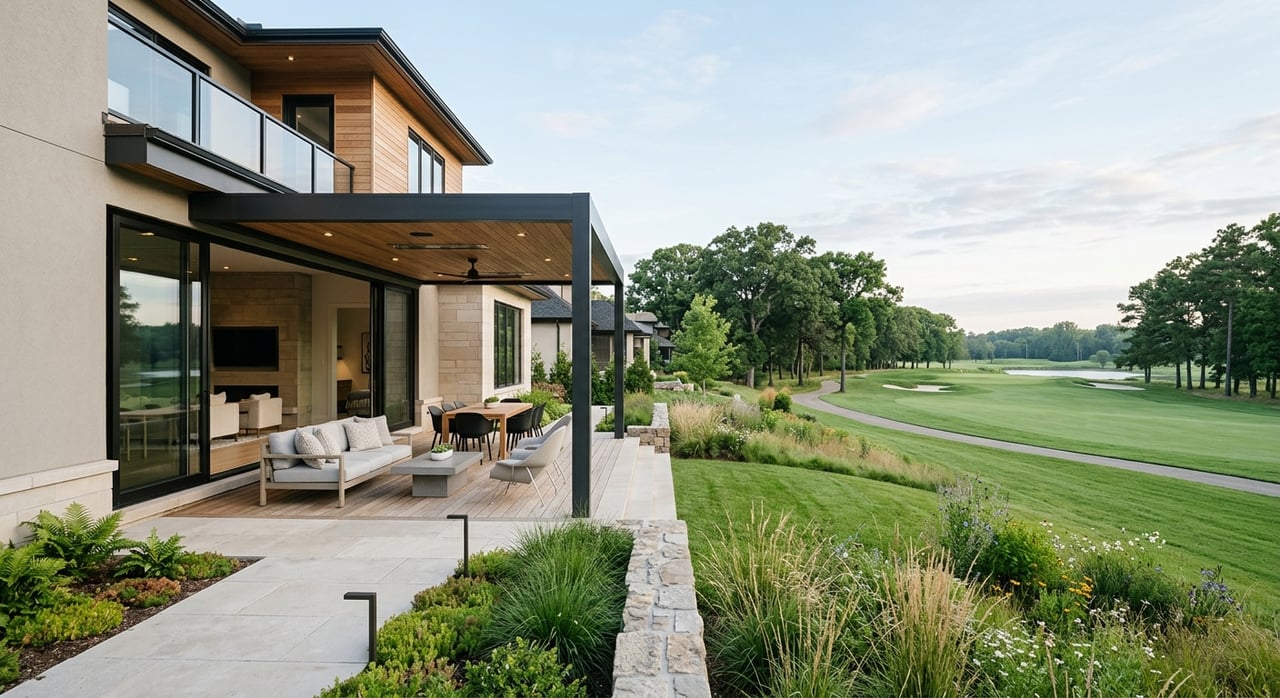
One of the biggest misconceptions about golf course living in Lone Tree is that it refers to one single enclave. In reality, the city includes a collection of established neighborhoods with different layouts, home styles, and HOA structures.
The city’s HOA list includes communities such as Carriage Club, Centennial Ridge, Heritage Estates, Heritage Hills, Cypress Greens, Fairways 39, and Bluffmont Estates. That variety matters because it means your options may range from more traditional detached homes to other housing types depending on the neighborhood and location.
Carriage Club offers one useful example of the housing pattern near the original golf-centered development. Its planning documents describe it as a planned residential community with single-family detached homes, trails, open space, and buffer areas. If you are imagining established suburban living near the course, that is a strong example of the kind of setting you may encounter.
More than one housing style
Lone Tree’s broader housing story extends well beyond classic fairway-adjacent homes. If you want golf access or golf proximity without limiting yourself to one type of property, the city offers more variety than many buyers expect.
RidgeGate neighborhoods include a mix of compact urban apartments, row homes, and eco-smart single-family homes. On the east side, Lyric is adding about 1,900 homes that range from condos and townhomes to detached ranches, cottages, and patio homes.
That gives you two different ways to think about Lone Tree. You can focus on the mature west-side neighborhoods tied more closely to the original golf community, or you can explore the newer east-side product that continues to expand the city’s housing choices.
HOA living in Lone Tree
If you are considering homes around the fairways, you should expect an HOA-heavy environment. In Lone Tree, that is a feature of the city’s planning history, not an exception.
According to the city, private associations help maintain neighborhood character, shared landscaping, common spaces, and rules for home improvements and property maintenance. For some buyers, that supports a more polished and predictable look. For others, it means taking time to understand design rules, dues, and community expectations before making an offer.
This is especially important if you are comparing neighborhoods that may look similar at first glance. Two nearby communities can have very different association structures, amenities, and maintenance responsibilities.
Daily life beyond the course
Golf may be the headline, but it is not the whole lifestyle. One of Lone Tree’s biggest advantages is that golf-course living is tied to a broader convenience and amenity package.
The city sits at the junction of C-470/E-470 and I-25 and is served by five light rail stations, along with RTD bus and demand-responsive transit. For you, that can mean easier commuting, simpler regional access, and more flexibility if you want to balance suburban living with regular trips across the metro area.
Lone Tree also centers much of its planning around pedestrian-friendly streets, bikeways, transit access, and mixed-use development. That creates a setting where errands, dining, recreation, and entertainment are often woven into everyday life rather than separated from it.
Trails, arts, and local amenities
If your ideal home search includes more than golf, Lone Tree has depth. The amenity mix is unusually dense for a suburban market, which is one reason the area appeals to both move-up buyers and downsizers looking for convenience.
RidgeGate is home to the Lone Tree Library, Lone Tree Arts Center, Lone Tree Recreation Center, hotels, historic Schweiger Ranch, Lincoln Commons, and RidgeGate Commons shopping areas. The city guide also highlights Park Meadows Retail Resort, the arts center, the recreation center, and the library as part of daily life in Lone Tree.
Outdoor access is another major part of the lifestyle. Lone Tree’s trail system includes Willow Creek Trail, the East/West Regional Trail, and Bluffs Regional Park and Trail, with connections to Highlands Ranch, Castle Pines, Parker, and South Suburban’s broader trail network.
That matters because it gives golf-course living a second identity. You are not just buying near fairways. You are often buying into a community with walking, biking, open-space, and transit advantages.
Public golf options nearby
Another benefit of living in Lone Tree is that one course does not define your entire golf routine. The area is part of a larger south-metro golf corridor with multiple options nearby.
South Suburban also operates Littleton Golf and Tennis, South Suburban Golf Course, and Family Sports Golf. If you like variety, that broader public-course network can be a meaningful plus.
The region also includes private clubs such as The Club at Inverness in Englewood and Cherry Hills Country Club south of Denver. Even if your home search is centered on Lone Tree, it helps to know the surrounding golf landscape is strong and well established.
Who golf course living fits best
Golf course living in Lone Tree can appeal to different kinds of buyers for different reasons. The match often depends less on whether you play golf every week and more on how you want your daily routine to feel.
You may be drawn to the area if you want:
- Established neighborhoods with planned design and maintained common areas
- Access to a public golf facility with resident benefits
- A suburban setting with trails, shopping, arts, and recreation nearby
- Convenient regional access through highways and light rail
- A mix of mature neighborhoods and newer housing options
For some buyers, the appeal is the view or the setting. For others, it is the combination of structure, convenience, and recreation that makes Lone Tree stand out.
What to keep in mind as you search
If you are exploring homes around the fairways, it helps to look beyond the course frontage itself. The best fit often comes from understanding the full neighborhood context, including HOA structure, nearby trails, access points, and the type of housing stock in that specific pocket of the city.
It is also worth comparing established west-side neighborhoods with newer east-side communities. Depending on your priorities, one may offer the character and lot patterns you want, while the other may offer newer construction or a different maintenance profile.
A thoughtful search in Lone Tree usually means balancing golf access with the broader lifestyle package. When you do that, you get a clearer picture of what makes the area distinct in the south metro market.
If you want expert guidance on Lone Tree neighborhoods, golf-adjacent homes, or the right fit for your next move, schedule your concierge consultation with Corken + Company.
FAQs
Is Lone Tree Golf Club public or private in Lone Tree?
- Lone Tree Golf Club & Hotel operates as a South Suburban facility, with resident and nonresident booking windows, annual memberships, dining, and event spaces.
What types of homes are near golf courses in Lone Tree?
- Homes near the fairways in Lone Tree are best described as a mix of established HOA neighborhoods and newer housing options, including detached homes, townhomes, condos, and some larger estate-style properties.
Are most golf course neighborhoods in Lone Tree part of an HOA?
- Yes. Lone Tree is a heavily HOA-managed community, and the city notes that associations help maintain neighborhood character, landscaping, common spaces, and property rules.
What amenities come with golf course living in Lone Tree besides golf?
- Beyond golf, Lone Tree offers trails, transit, shopping, arts, recreation, and mixed-use development that support a convenient everyday lifestyle.
Are there other golf courses near Lone Tree for regular play?
- Yes. South Suburban operates additional nearby public courses, including Littleton Golf and Tennis, South Suburban Golf Course, and Family Sports Golf, and the broader area also includes private club options.